

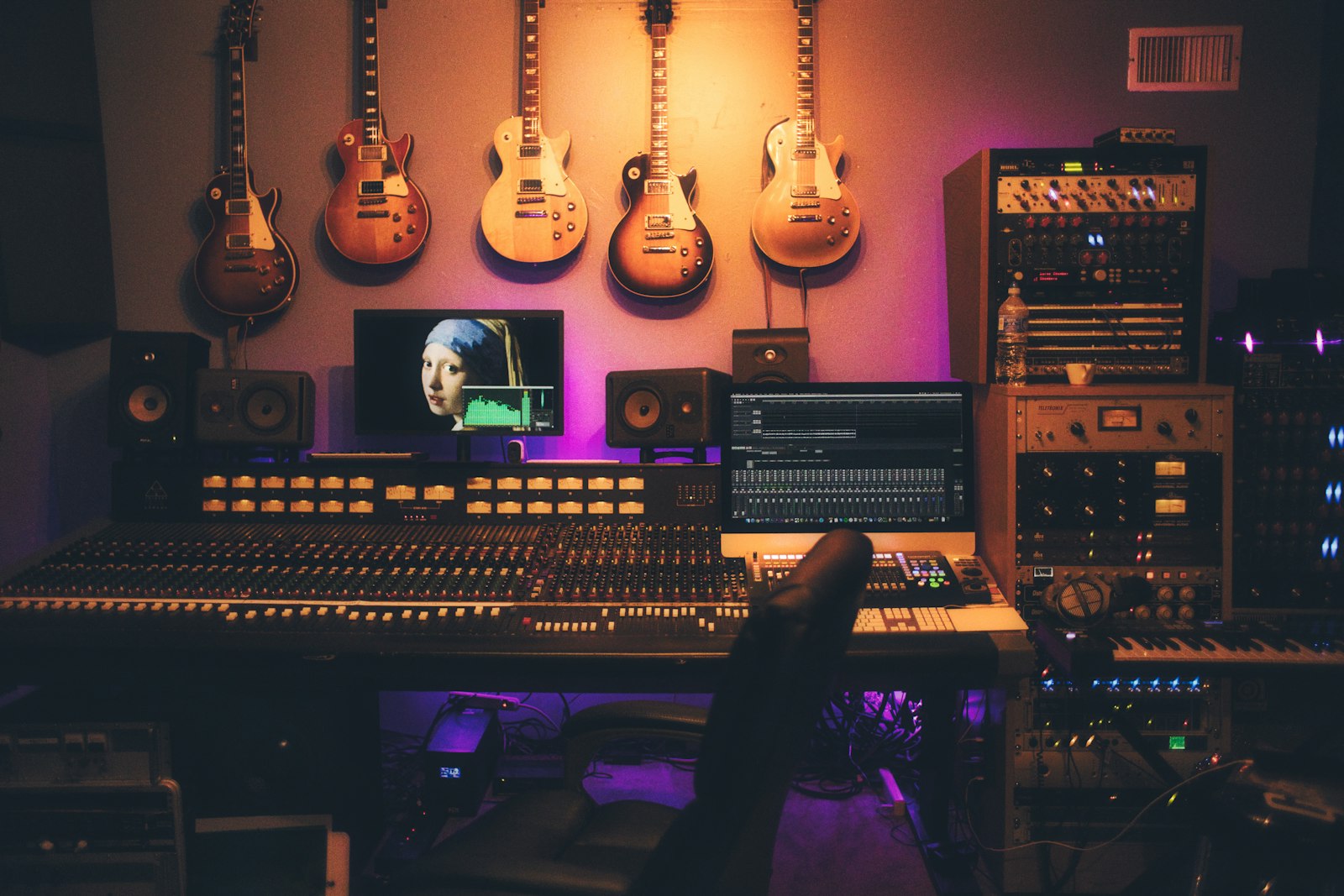
The Ultimate Guide to Home Studio Recording in 2026
Professional gear reviews, recording tutorials, and free acoustics tools to help you capture studio-quality sound at home.
Free Professional Audio Tools & Calculators
Use these free tools to design your room, train your ears, and speed up your workflow — no sign-up required.
📐
Studio Dimensions Calculator
Find the optimal room dimensions to minimise room modes and standing waves.
🎵
BPM to Milliseconds Converter
Sync your delay and reverb effects perfectly to the tempo of your track.
🎤
Online Mic Test
Check that your microphone is working correctly before your next recording session.
👂
Frequency Ear Training Quiz
Train your ears to identify frequencies faster — an essential skill for EQ and mixing.
Master the Art of Home Recording
Four pillars of knowledge to take your home studio from bedroom to broadcast quality.
Studio Equipment
The best audio interfaces, microphones, and studio monitors for every budget — from your first mic to professional-grade monitoring.
Recording Techniques
How to track vocals, electric guitar, and acoustic guitar in a home environment — professional results without a professional budget.
Acoustic Treatment
Fix room modes, build DIY absorption panels, and place bass traps correctly — your room is your most important piece of equipment.
Mixing & Mastering
DAW software, free plugins, and workflow tips to get your mixes sounding polished and ready for mastering.
⭐ Expert-Tested Gear for Your Studio
Every product is hands-on tested by our team of working engineers and producers before we recommend it.

9 Best Pop Filters for Recording Vocals: Our Top Picks 2026
If you've spent hours tracking vocals in your home studio, you already know the frustration: a perfect take, ruined by…

The 6 Best Ribbon Microphones for Studio Recording: Engineering & Buyer's Guide
Searching for the best ribbon microphones for your studio? You've landed in the right place. For decades, professional engineers have…

The Ultimate Guide to Connecting a MIDI Keyboard to Your Computer
Ready to start making music from home? Learning how to connect a MIDI keyboard to a computer is the single…

Line-Level vs. Hi-Z Inputs: The Ultimate Guide for Home Studios
Understanding Line-Level vs. Hi-Z Inputs is the single fastest way to fix muddy, thin, or lifeless direct recordings. Plug the…

How to Record Electric Guitar at Home: The Ultimate Step-by-Step Guide
Getting a huge, professional-sounding electric guitar tone inside a spare bedroom, closet, or apartment corner feels impossible when you can't…

Best MIDI Keyboards Under $100 (2026): 6 Budget Picks
Looking for a full kit? See our Home Studio Bundle Packages or check our full cost breakdown for every budget level.
How to Start a Home Recording Studio Today
Building a home studio doesn't require a five-figure budget or a commercial space. With the right foundational gear and a basic understanding of acoustics, you can record professional-quality tracks in a spare bedroom, a closet, or even a well-treated living room corner.
The foundation of any home studio is a reliable audio interface — the hardware bridge between your microphone or instrument and your DAW (Digital Audio Workstation). Paired with a quality condenser microphone and basic acoustic treatment, this core setup can produce results that rival commercial studios from a decade ago.
Your computer doesn't need to be a powerhouse — but it does need to meet minimum music production specs to run your DAW without dropouts. Most modern laptops and desktops handle recording comfortably with at least 16GB of RAM and an SSD. From there, focus your budget on the signal chain: interface → microphone → monitoring.
The biggest beginner mistake isn't buying the wrong gear — it's ignoring the room. Flutter echoes, bass buildup, and reflective surfaces will make even expensive equipment sound amateurish. A few strategically placed absorption panels and a correctly positioned pair of studio monitors will transform your recordings.
Once you're tracking, workflow matters. Learn the basics of EQ, compression, and how to make vocals sit in the mix — these three skills alone will elevate your productions significantly. For the full step-by-step walkthrough, read our complete guide: How to Record a Song at Home.
✔ Essential Home Studio Checklist
The minimum viable setup to start recording professionally at home:
- 💻 Computer — 16GB RAM, SSD, modern CPU. See our best computers for music production.
- 🎛️ DAW Software — Start free: best free DAWs or go pro with top paid options.
- 🔌 Audio Interface — The most important purchase. Read the buying guide first.
- 🎤 Microphone — A large-diaphragm condenser for vocals and acoustic instruments.
- 🔊 Monitoring — Studio monitors for mixing + closed-back headphones for tracking.
- 🧱 Acoustic Treatment — At minimum: absorption panels behind your monitors and on the first reflection points.
- 🎙️ Accessories — XLR cable, pop filter, mic stand, and headphone amp or splitter.
💡 Pro tip: Not sure what to buy first? Check our starter bundle packages — everything listed above in one place at different price points.
Why Trust Home Studio Recordings?
Written by Working Engineers
Every guide is written by our team of professional recording engineers with years of real-world studio and home recording experience.
Hands-On Gear Testing
We don't rely on spec sheets. Every piece of gear we recommend has been physically tested in a real recording environment before we publish a review.
Continuously Updated Content
The recording gear market moves fast. We regularly revisit, update, and re-test our recommendations to make sure you're always getting current, accurate advice.
About Home Studio Recordings
Home Studio Recordings was built by musicians who were frustrated with generic, surface-level advice. We're a team of recording engineers, producers, and audiophiles who have spent years working in commercial and home studios alike. Our mission is straightforward: give independent musicians the same knowledge and tools that professional engineers use, without the gatekeeping. Everything we publish is grounded in real experience — and when we say we've tested something, we mean it.