

Large Diaphragm Condenser Microphones should come first when the idea of starting a home recording studio hits you. During this time, you need not spend much on a bunch of studio recording mics when one piece can be used in an array of different projects.
As we mentioned in our flagship write-up on Different Types of Microphones, large-diaphragm mics (LDC) have diaphragms measuring 1-inch or larger.
Though quite a small difference from Small Diaphragm Condensers (1/2 or more but less than 1 inch) diaphragms, the LDC mics tend to be more or equally sensitive to SDC mics.
They also portray a positive difference in their frequency response in that their low-frequency sensitivity is a tad better and more authoritative for vocals, drum kits, and other uses.
That said, here is our guide to the…
Best Large Diaphragm Condenser Microphones
Under $100
Audio Technica AT2020
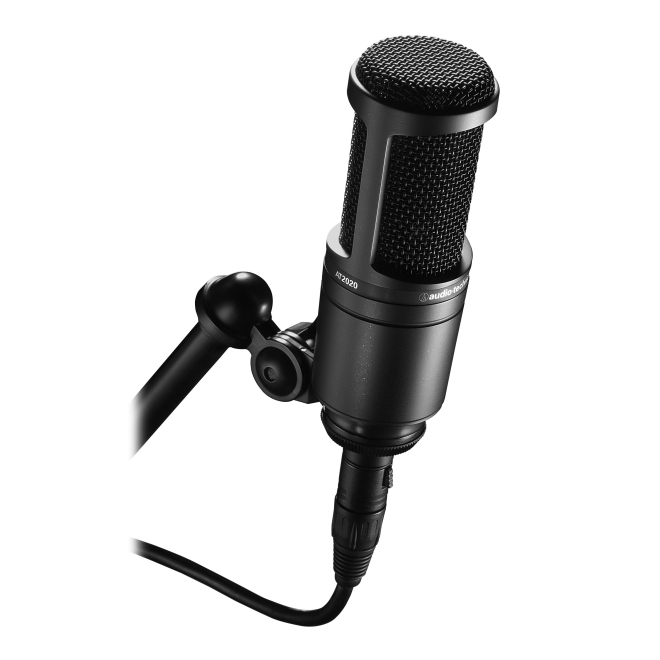
Features:
- Polar pattern: Cardioid
- Frequency response: 20Hz - 20 kHz
- Max SPL: 144dB
- Pad: 10dB
- Low-cut filter: 80Hz
- Connection: XLR
Under $300
Rode NT1A
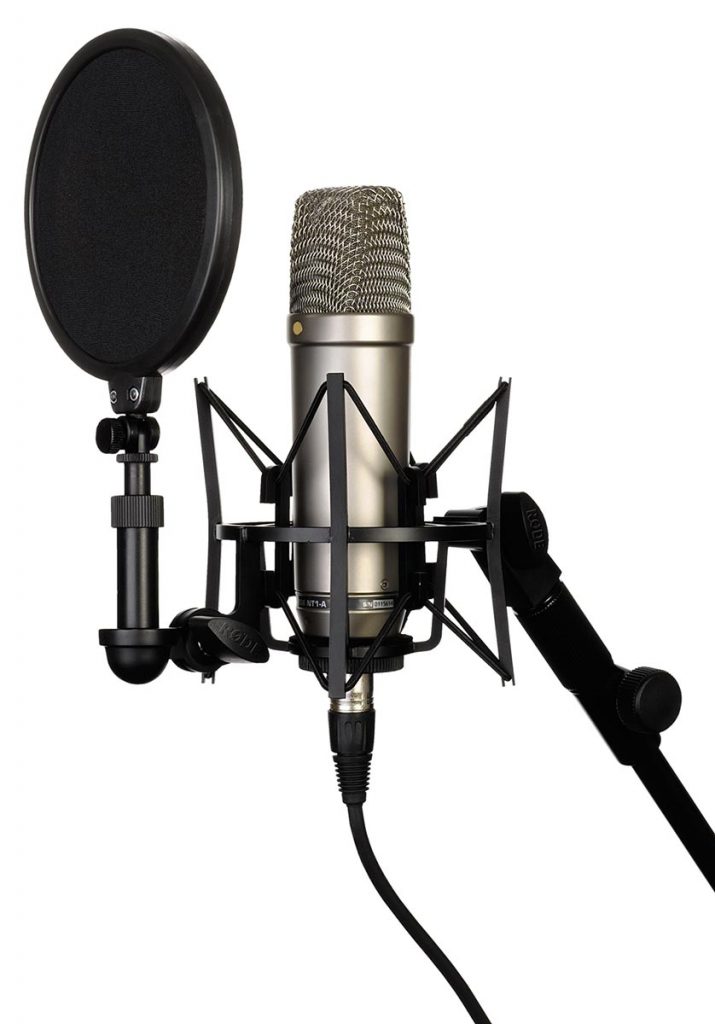
Features:
- Pickup pattern: Omni, cardioid, figure-of-eight
- Frequency response: 20 hz - 20 kHz
- Max SPL: 137 dB.
- Pad: No
- Low-cut filter: No
- Connection: XLR
Under $1000
Neumann TLM 102 MT

Features:
- Directionality pattern: Cardioid
- Frequency range: 20Hz-20 kHz
- Sensitivity: 11mV/PA
- Max SPL handled: 144dB
- Powering: phantom power source needed
- Connector: XLR
Here are our top 9 picks of large-diaphragm condenser microphones below $1000. We've tried to include a variety of different mics to cater to different budgets.
Under $100
Audio Technica AT2020
Compare Prices at:
Thomann | Amazon | Guitar Center
Features:
- Polar pattern: Cardioid
- Frequency response: 20Hz - 20 kHz
- Max SPL: 144dB
- Pad: 10dB
- Low-cut filter: 80Hz
- Connection: XLR
The Audio Technica AT2020 is a great large-diaphragm condenser microphone for anyone looking to start their home studio. This mic has a cardioid polar pattern, which helps to reduce background noise and a high SPL rating of 144dB, so it can handle louder sounds without distorting.
The Audio Technica AT2020 is also an affordable microphone, making it a great option if you're on a low budget. The AT2020 is also very sturdy, which is reassuring considering its relatively low price point. It has a natural sound and is versatile enough for a variety of applications.
While it's possible to get some noise if the mic is placed too far away from the source, it works well for close-miking vocals and guitar. Overall, the Audio Technica AT2020 is a great option for anyone looking for a quality large-diaphragm condenser microphone on a budget.
https://www.audio-technica.com/
MXL 990

Compare Prices at:
Thomann | Amazon | Guitar Center
Features:
- Polar pattern: Cardioid
- Frequency response: 20Hz - 20 kHz
- Max SPL: 130dB
- Pad: No
- Low-cut filter: No
- Connection: XLR
With its exemplary performance and low price, the MXL 990 is an excellent choice if you’re wondering what mic to spend your 100 bucks on.
The MXL 990 boasts excellent build quality and a substantial feel. It has a vintage body style and bronze champagne finish. This MXL 990 features a fixed cardioid polar pattern, it is, therefore, able to pick up clean signals coming from the front with minimal noises from the sides.
MXL 990 has a ¾-inch gold-sputtered diaphragm with a high SPL-handling capacity of 130 dB. Its 30Hz – 20 kHz frequency response is also worth noting. Its design, high SPL, and sensitivity make it a jack of all trades in your studio.
It comes packaged with both the standard and shock mounts for use with either boom or vertical microphone stands.
Pros
- Easy to use
- Superb audio
- Built to last
Cons
- Weight 544.3g / 1.2 lbs it's a bit heavy
Under $300
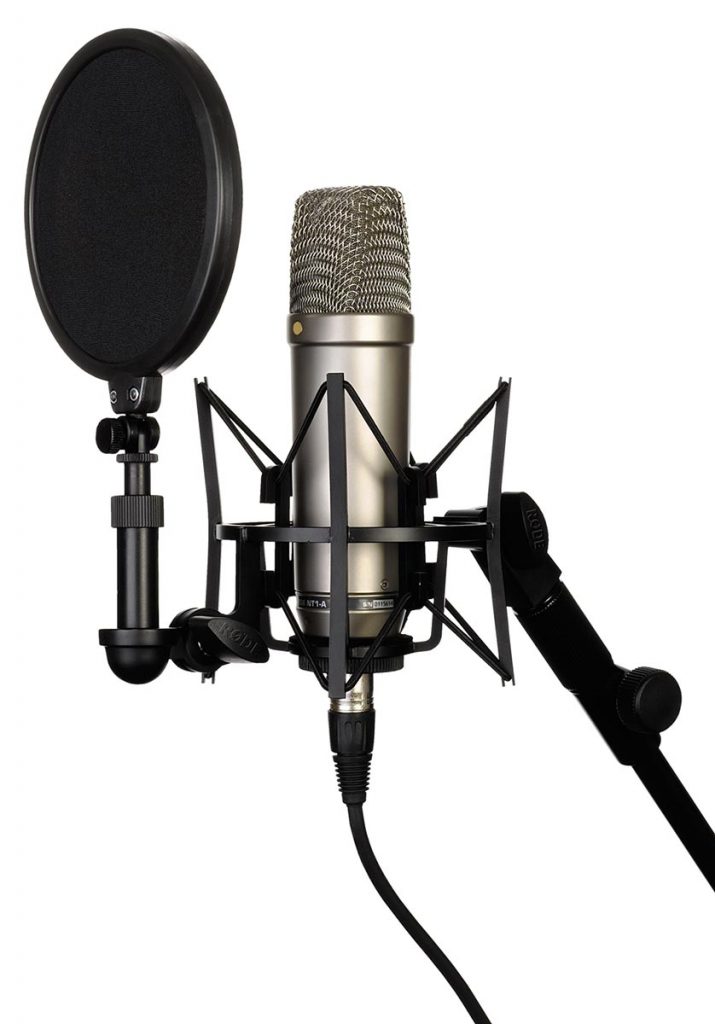
Rode NT1A
Compare Prices at:
Thomann | Amazon | Guitar Center
Features:
- Pickup pattern: Omni, cardioid, figure-of-eight
- Frequency response: 20 hz - 20 kHz
- Max SPL: 137 dB.
- Pad: No
- Low-cut filter: No
- Connection: XLR
The Rode NT1A is one of the most used condenser mics for home recording artists and professional engineers. This mic is an upgrade of the original Rode NT1, this newer model includes an improved capsule and electronics thereby resulting in an all-time best-seller.
The NT1A is mainly praised because of its extended dynamic range, high SPL-handling capabilities, clarity, and warmth. It has a flat 20Hz- 20 kHz frequency response, couple this with its high sensitivity and the 137 dB maximum SPL handling capacity and you’ll be able to use this mic with almost any instrument requiring high frequencies including guitars and drums.
With an electric guitar, for instance, Rode NT1A sounds full and crisp. It has a punchy low end and never sounds muddy. On the other hand, the highs can be a bit sharp but not overwhelming. Notably, its crisp recording capabilities for vocals make this the best affordable condenser microphone for voice recording.
Pros
- Reputable brand
- Budget-friendly price
- Complete vocal recording package
Cons
- It is a bit delicate.
Audio-Technica AT2050

Compare Prices at:
Thomann | Amazon | Guitar Center
Features:
- Pickup pattern: Omni, cardioid, figure-of-eight
- Frequency response: 20 hz - 20 kHz
- Max SPL: 149 dB.
- Pad: Yes
- Low-cut filter: Yes
- Connection: XLR
Audio-Technica’s AT2050 is an evolution of its previous model, the AT2020. It’s also similar to the AT2035 structurally and cosmetic-wise. It has a rugged body construction with an extension over its metallic grill. Its metallic body again boasts a stylish black powder coating that won’t peel or scratch off easily.
The AT2035 also has an easily accessible switch that lets you choose between its 3 switchable pickup patterns: cardioid, omni, and figure-eight. Its switchable directionalities render the AT2050 useful for several studio recording applications including vocals and acoustic and electric instruments.
It has 2 capsule diaphragms with gold-sputtering which have also been aged for long stability and performance. The AT2050 ships with a shock-mount and a protective cloth.
Pros
- Easy to set up and configure
- Build to last
- Impressive performance
Cons
- Low sensitivity
https://www.audio-technica.com
Under $500
Aston Microphones Spirit

Compare Prices at:
Thomann | Amazon | Guitar Center
Features:
- Pickup pattern: Omni, cardioid, figure-of-eight
- Frequency response: 20 hz - 20 kHz
- Max SPL: 137 dB.
- Pad: No
- Low-cut filter: No
- Connection: XLR
The Aston Spirit Microphone is a great choice for those who want to capture the full range of their voice or instrument. I was really impressed with the quality of the sound that this mic captures, it really brings out the best in whatever you're recording. The build quality is also excellent, and I love the vintage look of it.
The microphone body features a three-way switch that lets you select among omnidirectional, cardioid, and bidirectional polar patterns. This multi-pattern condenser mic's already versatile nature is improved with two configurable pads and a high-pass filter.
The Spirit XLR Mic is made with a sleek aluminium alloy body, which makes it sturdy but also very light. On the body of the mic there is a three-way switch that lets you select between cardioid, omnidirectional, and bidirectional polar patterns. This multi-pattern condenser mic's already versatile nature is improved with two configurable pads and a high-pass filter.
Overall the Aston Spirit Microphone is great for recording vocals and instruments and wants high-quality sound. It has a sleek durable design and attractive aesthetics. The Aston Spirit XLR Microphone is worth the price
Pros
- You get a lot of mic for the price
- It has a sleek and durable design
- Good all-rounder for vocals, acoustic guitar and percussion
Cons
- Difficult to find any
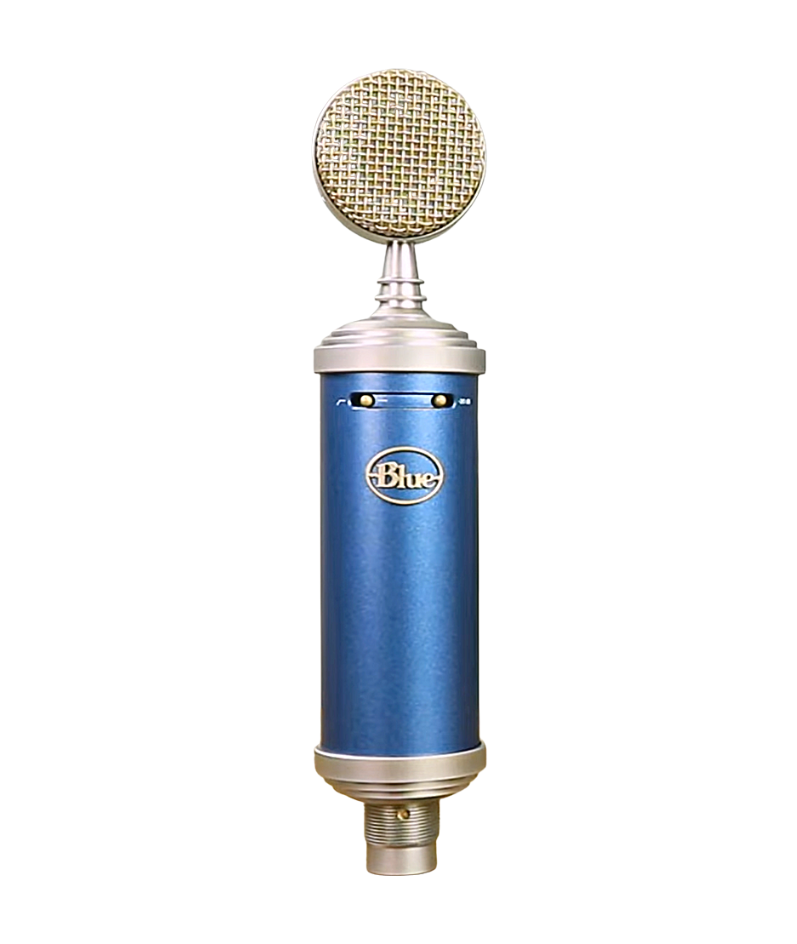
Blue Bluebird
Compare Prices at:
Thomann | Amazon | Guitar Center
Features:
- Polar pattern: Cardioid
- Frequency response: 20kz- 20 kHz
- Max SPL: 138dB
- Pad: Yes
- Low-cut filter: Yes
- Connection: XLR
The Bluebird Microphone has a smooth, open, and airy sound with clear low ends and mids that make it easy to use in most applications. We’ve personally used it in our studios before upgrading to the pricier Neumann TLM102 MT and Shure KSM27. You can, therefore, take it from us that this is a great mic that will stand in place of a broken high-end model or help you graduate to professional quality mics.
A few specs that make this a keeper mic are its 138 dB SPL handling capability coupled with its flat 20Hz- 20 kHz frequency range. It’s able to perform admirably on almost all vocals with as near-to-natural outputs as possible.
On the other hand, the capsule itself is held by a thin, sleek neck and has a 6-micron Mylar diaphragm inside. Notably, there has been a lot of complaints about this slim neck since it easily snaps off after some time.
If you’re looking for a versatile condenser microphone to use with your acoustic guitars, for female and male vocals, and rap without spending a fortune, Bluebird is our recommendation. The versatility of this microphone makes it a go-to mic for many small home-based studios and a backup for professional setups too.
Pros
- Has excellent sensitivity levels
- High SPL-handling capabilities
- Reliable in most applications
Cons
- Isolated complaints of the pop filter quality
- Slim neck as it's quite fragile and can break if you're not careful
Under $1000
Neumann TLM 102
Compare Prices at:
Thomann | Amazon | Guitar Center
Features:
- Directionality pattern: Cardioid
- Frequency range: 20Hz-20 kHz
- Sensitivity: 11mV/PA
- Max SPL handled: 144dB
- Powering: phantom power source needed
- Connector: XLR
Neumann is renowned for its high-end but best-in-class mics with almost everything that a pro or newbie studio artist would look for…except the price. Its bigger brothers – the Neumann U47 and Neumann U87- would rudely ask for a few thousand dollars if they were brought back.
At 1.1lbs, Neumann TLM102 is amongst the most compact and lightest microphones in this list. This is, however, reflected by its small size which is slightly smaller than its brother the TLM103. It’s available in 2 finish options: nickel and matte.
One thing that caught our attention when trying out this mic is that there weren’t any noticeable rises or sparks at its high end. It gave a full natural sound with my acoustic guitar and a healthy knock when used in front of the drum kits. It also offers excellent sounds on both male and female vocals that easily stand out in the mix.
Pros
- Good sound quality
- Feature-packed and very stylish
- Reputable brand
- Made for the modern studio
Cons
- Slightly high self-noise
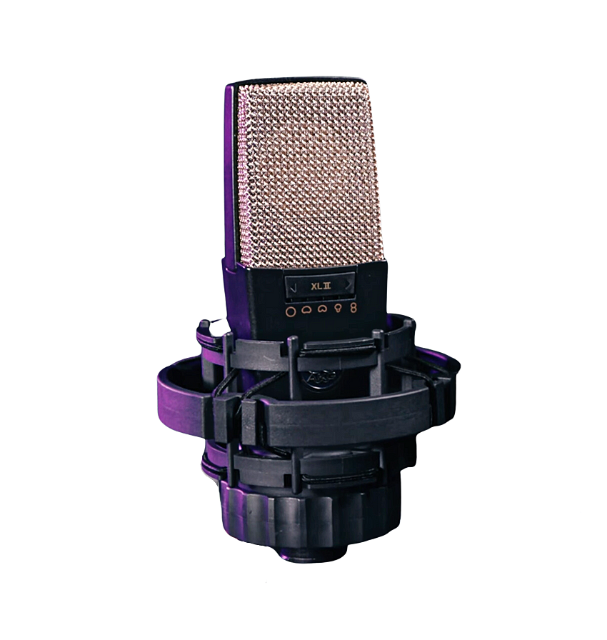
AKG C414 XLII
Compare Prices at:
Thomann | Amazon | Guitar Center
Features
- Pickup pattern: 5 pickup patterns and 4 intermediate
- Frequency response: 20 hz - 20 kHz
- Max SPL: 158 dB
- Pad: Yes
- Low-cut filter: Yes
- Connection: XLR
The C414 XLII features a classic design that it has borrowed from the legendary C 414 B-ULS mic, however, a closer look reveals it has a few more modern touches. On both its front and rear, the C414 XLII has soft-touch locker switches all of which help you navigate through its 9 selectable polar patterns. Right below the switches is a status LED that illuminates your choices.
Its digital switching circuitry boasts AKG’s leading-edge technology coupled with modern components that’ll bring out the best in all your projects. Anyone who knows a good mic will without a doubt point to the C414 XLII as one of the best. Its 5 pickup patterns and 4 intermediate settings help you find your sweet spot.
You also get 3 different bass cut filters and 3 pre-attenuation pads (-6dB, -12dB, and -18dB) to help you achieve your most desired sounds. The C414 XLIII comes with everything you need to get started including a stylish carrying case, a spider-type shock mount, a pop filter, and a windscreen.
Pros
- Has high SPL
- Well-built, Impressive design
- From a reputable brand
- 5 pickup settings
Cons
- pricy
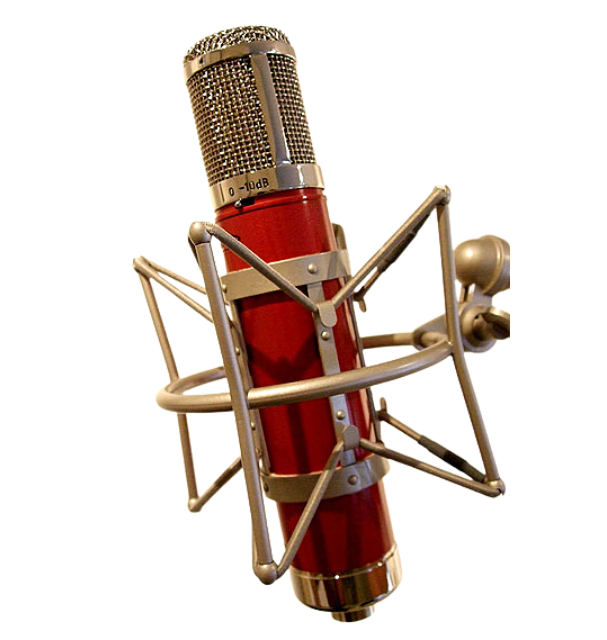
Avantone Pro CV-12
Compare Prices at:
Thomann | Amazon | Guitar Center
Features:
- Polar pattern: Cardioid
- Frequency response: 20Hz - 20 kHz
- Max SPL: 136 dB
- Pad: No
- Low-cut filter: No
- Connection: XLR
The Avantone Pro CV-12 is another sweet spot if you want a super warm microphone on vocals, and even richer on your acoustic guitars.
Avantone CV-12 is built to offer extreme versatility in terms of sound quality. Unlike all the other units that we’ve seen thus far, this one offers the 3 major polar patterns: cardioid, omnidirectional, and figure-8, and 6 other ‘’in-between’’ settings.
The Avantone Pro CV-12 features a dual gold-sputtered Mylar capsule and a PS-12 power supply. Setting up is quite easy and straightforward. You just need to fit the shock mount on the mic stand and then slip your wired condenser microphone through the shock mount. Later, connect the XLR cable to your mixer or interface, and warm it for about 15 minutes before doing your thing.
Included with the CV-12 you get a retro-style shock mount, an aluminum storage case, a 3-pin audio cable, and a PS-12 power supply.
Pros
- From a reputable brand
- It is stylish
- Has 9 selectable pickup patterns
Cons
- Isolated complaints of problems with volume control
- The grill is quite thin
Large-diaphragm Condenser Microphones Buyers Guide
Types of Polar Patterns
Simply worded, a mic’s polar pattern refers to the directions from which the mic receives sounds. There are 5 common types here;
Cardioid mics
These mics have greater sensitivity to the singer’s voice when at the front and a little from the sides. They don’t receive sounds coming from 1800 opposite of the direction they are aimed at. They are ideal for loud stages.
Supercardioid mics
These mics have greater isolation of ambient sound and are more resistant to feedback than cardioid microphones. However, they have a little bit of high sensitivity to sounds coming directly from their rear side.
Hypercardioid mics
This pickup pattern receives sounds from the front and those from 1800 opposite the direction their diaphragm is aimed.
Bidirectional microphones
Also referred to as ‘figure of eight,’ these models receive sounds from the front and the rear but not from the sides (900).
Omni-directional polar patterns
These mics receive sounds from all angles irrespective of where they are aimed at. The major setback with these is that you can’t avoid sounds from undesired sources.
Frequency Response
This is another important aspect that you need to understand. Frequency response (measured in hertz) refers to the range at which the mic will be able to pick up sounds supremely. People hear things between 20 Hz and 20 kHz. A good condenser microphone can capture these top-end frequencies without getting muddier while dynamic microphones lose it at around 16 kHz.
As such, if you’re looking for a mic to record high-end details from sources such as a singer’s voice, acoustic guitars, drum overheads, and electric guitars, a condenser mic should be the first on your list.
A condenser with lower numbers on the lower frequency side is also more ideal. In fact, those with the ‘’extended low-frequency response’’ tag are more suitable.
Proximity effect
The proximity effect refers to the range in which the bass frequencies are louder than the sound source near the mic.
While this is not regularly regarded as a spec, it’s worth keeping in mind especially if you need to unleash the best bass tones from an instrument through miking.
Sound Pressure Level (SPL)
This talks about the maximum volume of sound in decibels that a mic can handle without damaging the diaphragm. This is a vital aspect to consider if you plan to use your mic with loud instruments. A good condenser mic should deliver quality sounds between 100dB-130dB. If you want to play your amplified instruments at a higher dB than the recommended ones, then you should opt for a dynamic microphone.
Sensitivity
This is the direct opposite of SPL. It refers to the lowest sounds in decibels that the mic can detect. Condenser microphones are known as the best-in-class in this characteristic. No wonder they are so much respected in both home and professional recording studios.
Besides the specs, it’s also imperative that we look at the different types of condenser microphones on the market. This will not only narrow down your choice but also slash your searching time quite significantly.
Large-diaphragm vs. Small-diaphragm condenser microphones
A common question that we’ve encountered is, ‘’Does the size of a microphone’s diaphragm matter?’’ Our answer has always been a big YES when referring to condenser mics and ‘’Not really’’ for dynamic microphones.
In case you’re not new to mics, you might have noticed that the explanation as either large or small is commonly found in condenser microphones books and rarely in dynamic mics descriptions.
So, what is the difference between a large and a small diaphragm microphone? You must be wondering.
Normally, a condenser microphone is said to be large if its capsule is fitted with a diaphragm measuring between ¾’’and 1’’ (22mm – 25.4mm). For the small models, the size of the diaphragm is usually a ½’’ or less.
Quite interestingly, large-diaphragm condenser microphones have a large body construction while small-diaphragm mics are slim and smaller in body size.
Advantages & Disadvantages of LDC & SDC Mics
The most obvious advantage that a large diaphragm microphone has over its smaller counterpart is in its excellent self-noise reduction. This, therefore, makes it a killer choice for the excellent recording of voices and an array of sound equipment.
Secondly, large-diaphragm condenser mics are able to receive more acoustic energy which translates to higher signal voltage generation.
However, these models don’t win in all battles. Their need for suspension and big size makes it hard to use in tight space areas.
On the other hand, small diaphragm condenser microphones have a superb transient response and consistent pickup patterns and also work well with high frequencies. Unlike their immediate rivalries, small diaphragm condenser mics capture sounds and voices in their most natural form without making them sound artificially pleasing.
Other things to consider
Microphone package
Another factor to consider when shopping for a professional quality condenser microphone is what accessories are included in the package. This also helps in avoiding last-minute frustrations. No other thing irritates me more than not being able to use your new mic immediately after delivery because, apparently, it does not ship with this or that.
Powering
We’ve already touched on this. Here, we did mention that some condenser microphones may require simple USB powering to function. On the other hand, other types need 48v of power boost. This can either be from a standalone powerbox or an audio interface.
How much should I spend on a Condenser microphone?
As a rule of thumb, always steer away from very low-priced condenser microphones. Maximizing your studio’s sound quality is a proposition that’ll drain you a considerable amount of bucks.
Well, this doesn’t nullify all possibilities of falling for good quality yet cheap condenser microphones that won’t break the $100 barrier. The MXL 990 for instance, are quite commendable entry-level models that won’t cost you more than a hundred bucks and still do an amazing job.
However, as you just found out in the product reviews, the more you spend, the higher your chances of achieving supreme quality sounds. True: Good things don’t come cheap.
Final Thoughts
Purchasing the Best Large-diaphragm Condenser Microphone (in your budget) is a must if you’re not ready to gamble with the sound quality of your projects. Luckily, the market boasts a few selectable options. Here, we’ve just revealed 9 options that we believe could be the best for vocals and instruments today.
Whether you need one under $100 or you feel that you’re ready to play in the big league with $1000, the list has all the details.
Last update on 2026-08-20 / Affiliate links / Images from Amazon Product Advertising API


