Finding the right USB microphone for singing can feel overwhelming — the market is flooded with options claiming "studio quality," but only a handful genuinely deliver when a vocalist steps up and belts out a high note. We've tested these mics hard: recording hushed breath verses, full-power choruses, and sibilant consonants in both a treated home studio and a standard untreated bedroom. The results might surprise you.
Whether you're tracking demos, building a YouTube channel, recording song covers, or setting up your first home studio, this guide covers the 10 best USB microphones for singing — with honest test results, detailed specs, and a buying guide to match the right mic to your voice and budget.
Quick Summary: Our Top Picks for Singers
⚡ Quick Verdict
- Best Overall: Shure MV7+ — Hybrid USB/XLR, built for serious vocal work
- Best Unclippable (32-bit Float): Rode NT1 5th Generation — You literally cannot distort it via USB
- Best for Streaming Vocalists: Elgato Wave:3 — ClipGuard technology prevents loud-chorus distortion
- Best Home Studio: Audio-Technica AT2020USB-X — The studio standard, now with USB
- Best for Singer-Songwriters (with Guitar): Samson G-Track Pro — Plug your guitar directly into the mic
- Best High-End / Radio-Ready Sound: Apogee HypeMiC — Built-in analog compression makes you sound mixed
- Best Versatile Vocal Styles: Blue Yeti X — Four patterns, Blue VO!CE software suite
- Best Mid-Range Warmth: Rode NT-USB+ — Flattering on almost every voice type
- Best Value Features: JLab Talk Pro — 192kHz/24-bit at a budget price
- Best for Travelling Songwriters: Shure MV5 — Fits in a jacket pocket, works with your iPhone
| Microphone | Type | Best For | Key Standout |
|---|---|---|---|
| Shure MV7+ | Dynamic | Overall vocal recording | USB + XLR, Auto Level Mode |
| Rode NT1 5th Gen | Condenser | Powerhouse singers | 32-bit float — unclippable |
| Elgato Wave:3 | Condenser | Singing streamers | ClipGuard + Wave Link software |
| AT2020USB-X | Condenser | Home studio recording | 24-bit/96kHz, low self-noise |
| Samson G-Track Pro | Condenser | Singer-songwriters | Built-in ¼" instrument input |
| Apogee HypeMiC | Condenser | High-end / radio-ready | Built-in analog compression |
| Blue Yeti X | Condenser | Versatile vocal styles | 4 patterns + Blue VO!CE |
| Rode NT-USB+ | Condenser | Mid-range warmth | Pop filter included, warm tone |
| JLab Talk Pro | Condenser | Budget value | 192kHz/24-bit, 4 patterns |
| Shure MV5 | Condenser | Travel & mobile recording | iOS compatible, ultra-portable |
How We Tested These Microphones for Singing
We believe great gear guides are built on real-world testing, not spec sheets. Here's exactly how we evaluated each microphone in this list.
Our Testing Environment
We recorded in two distinct spaces deliberately: a treated home studio with acoustic foam panels and bass traps on all primary reflection points, and an untreated standard bedroom with parallel walls and minimal soft furnishings. This approach matters because most singers don't have a perfect acoustic space — and a mic that sounds great in a treated room can expose every flaw in a live room. For more on setting up your space properly, our guide to acoustic treatment for home studios is essential reading.
Our Vocal Tests
- The Sibilance Test — We recorded phrases heavy with "s" and "sh" consonants to identify harshness or sibilance coloration at various gain levels.
- The Plosive Test — Repeated "p" and "b" sounds delivered at close range (4–6 inches) to see how each mic's internal windscreen and capsule design handled air bursts.
- The Dynamic Range (Belting) Test — We pushed each mic with loud, 95–105dB SPL vocal performances to find the point of clipping or distortion. This is where the Rode NT1 5th Gen's 32-bit float capability proved game-changing.
- The Proximity Effect Test — Recording at 2, 6, and 12 inches from the capsule to document low-frequency bass buildup behavior — critical for singers who move during takes.
All recordings were made at 24-bit/96kHz (or 32-bit float where supported), using Reaper DAW with no additional processing applied at the tracking stage — just the raw mic signal into the DAW. For those just getting started, check out our guide on how to record studio quality vocals on your computer.
The 10 Best USB Microphones for Singing — Detailed Reviews
1. Shure MV7+ — Best Overall USB Microphone for Singing

Compare Prices at:
Amazon | Thomann
The Shure MV7+ remains our overall champion for vocal recording, and it earned that title in testing — not just on paper. During our belting test, it handled 100dB of vocal pressure without any audible distortion, maintaining a controlled, present tone that dynamic mics are celebrated for. Its dynamic capsule naturally rejects room reflections, making it one of the safest picks for singers recording in untreated bedrooms.
USB vs. XLR: Future-Proofing Your Setup
This is where the MV7+ separates itself from purely USB mics. Right now, you can plug into your computer via USB-C and start recording immediately. But when you're ready to upgrade to a dedicated audio interface for even better preamp quality, the MV7+'s XLR output means you don't need to buy a new microphone — it grows with your setup. This hybrid flexibility is something USB-only mics simply cannot offer.
- Auto Level Mode — The MV7+ intelligently adjusts gain in real time, so if you drift closer or further from the mic mid-take, it compensates. This is invaluable for emotional vocal performances where singers naturally move.
- Touch panel controls — Adjust gain, mute, and monitoring volume directly on the mic body with capacitive touch — no fumbling for knobs during takes.
- Built-in headphone output — Zero-latency monitoring so you can hear yourself clearly while recording. Latency-free monitoring is critical for staying in pitch and time.
- ShurePlus MOTIV app — EQ, compression, and limiter controls accessible from your phone or tablet, giving you a surprisingly powerful processing toolkit at no extra cost.
In our sibilance test, the MV7+ showed its dynamic character — slightly rolling off extreme high-frequency harshness, which is actually a feature for singers prone to sibilance issues. It sounds warm, present, and controlled without needing any post-processing EQ to tame harsh frequencies.
2. Rode NT1 5th Generation — Best for Powerhouse Singers (Unclippable)

Compare Prices at:
Amazon | Thomann
The Rode NT1 5th Generation is the most significant innovation in USB microphone technology to arrive in the last decade — and that's not hyperbole. It's the world's first studio condenser microphone to feature a 32-bit float digital output via USB, and for singers, that changes everything.
Why 32-Bit Float Is a "Cheat Code" for Singers
Traditional 24-bit recording gives you approximately 144dB of dynamic range, which sounds like plenty until a passionate belter suddenly blows past the gain setting you carefully set during soundcheck. The result? Clipped, distorted audio that ruins a take. With 32-bit float recording, the dynamic range is so vast that it is virtually impossible to overload the signal via USB, no matter how loud you get. You can literally scream into the microphone at maximum volume, record, and then pull the gain back in post-production — the full, undistorted signal will be waiting for you in the recording.
⚠️ Important: 32-bit float only works via the NT1 5th Gen's USB connection. The XLR output remains a traditional analogue signal. You'll also need a DAW that supports 32-bit float recording (Reaper, Logic Pro, and Adobe Audition all support it).
- 4dB self-noise — Among the lowest in the industry for a large-diaphragm condenser, capturing delicate breath and pianissimo passages with stunning clarity.
- Dual XLR/USB connectivity — Like the MV7+, it offers a future-proof upgrade path to an audio interface via XLR without replacing the microphone.
- 192kHz maximum sample rate — Exceeds most USB mics on the market and provides the highest resolution digital recording available in this class.
- Onboard DSP — Built-in compression, high-pass filter, noise gate, and the legendary APHEX Aural Exciter for vocal polish without a DAW.
- Rode's 10-year warranty — Outstanding long-term value assurance, especially important for a premium investment.
In our belting test, the NT1 5th Gen (connected via USB in 32-bit float mode) recorded a vocalist hitting 105dB SPL peaks without a single clipped sample. When we pulled the waveform back in Reaper, the full dynamic performance was intact, ready for post-production. No other USB mic in this list can make that claim.
3. Elgato Wave:3 — Best for Live Singing Streamers

Compare Prices at:
Amazon
If you perform or sing live on Twitch, YouTube, or TikTok Live, the Elgato Wave:3 solves the number-one problem streaming vocalists face: clipping during loud choruses. Its proprietary ClipGuard technology runs two separate capsule channels simultaneously — one at your set gain level and a second one at a lower safety gain — and if your voice surges past the first channel's threshold, the mic seamlessly switches to the safety channel. You never clip. Your audience never gets a distorted screech in their headphones.
- ClipGuard anti-distortion — Dual-channel architecture prevents distortion during unexpected vocal peaks. Ideal for singers who can't stop mid-performance to adjust gain.
- Wave Link software ecosystem — A full audio routing application that lets you mix up to nine different audio sources (mic, game, music, Discord, etc.) and create separate mixes for yourself and your audience. Essential for live-streaming vocalists who need to manage complex audio.
- AI Voice Focus — Powered by AI, this real-time noise suppression tool isolates your voice with precision, removing background noise without the hollow, over-processed artifact sound of older gate-style noise reduction.
- 24-bit/96kHz recording — Studio-grade resolution that captures vocals with professional clarity.
- Built-in high-pass filter — Removes low-frequency rumble from keyboard typing, desk bumps, and air conditioners — real-life annoyances in a live streaming setup.
In testing, we pushed the Wave:3 with a sudden 12dB gain spike while singing — simulating a passionate, unplanned moment of belting during a live stream. ClipGuard engaged seamlessly. The recording showed no distortion. For streaming vocalists, this alone is worth the price of admission.
4. Audio-Technica AT2020USB-X — Best Home Studio USB Mic
Compare Prices at:
| Thomann
The Audio-Technica AT2020 lineage is one of the most trusted in home studio recording — the XLR version has sat on a million desks worldwide. The AT2020USB-X brings that same studio-standard large-diaphragm condenser capsule directly to USB, and in testing it demonstrated a neutrality and transparency that the other mics on this list don't quite match. What you sing is what you get — no flattering warmth curves, no hyped top end. Just honest, accurate vocal reproduction.
- 24-bit/96kHz A/D conversion — Exceeds CD quality and provides the resolution needed for professional-level vocal productions.
- Ultra-low self-noise — Captures soft vocal nuances, breath control, and quiet passages with stunning realism and minimal noise floor.
- Monitor mix control — Blend your live mic signal with computer playback directly on the mic body — essential when overdubbing vocals to a track.
- All-metal chassis — Built to withstand years of daily home studio use. This is a mic you buy once and keep.
Sibilance test result: The AT2020USB-X showed a slight presence peak around 8–12kHz, which can add air and definition to vocals. Singers who already have a bright, sibilant voice may want to apply a small de-esser or high-shelf cut in their DAW — but for most voices, this adds welcome clarity.
5. Samson G-Track Pro — Best for Singer-Songwriters Who Play Guitar
Compare Prices at:
If you're a singer who also plays guitar, bass, or any other instrument with a ¼" output, the Samson G-Track Pro is in a class by itself among USB microphones. It's the only mic in this list that doubles as a full audio interface — featuring a built-in ¼" instrument input on the body of the microphone itself. You can record your vocals and your guitar simultaneously into two separate tracks in your DAW, without any additional hardware. For a solo singer-songwriter tracking demos at home, this is genuinely transformative.
How the Dual-Track Recording Works
The G-Track Pro sends your vocal signal and your instrument signal as two separate channels to your computer over a single USB cable. In your DAW, they appear as individual tracks — vocal on channel 1, guitar on channel 2. You can mix them independently, apply different EQ and compression settings, and produce a fully arranged demo from a single USB connection. For more information on recording acoustic guitar alongside vocals, see our guide on how to record a song at home professionally.
- Dual 1" condenser capsules — Large capsules that capture vocal detail and nuance with high fidelity.
- Three polar patterns — Cardioid, omnidirectional, and bidirectional, giving flexibility for different recording situations.
- 24-bit/96kHz recording — Studio-quality resolution for both the vocal and instrument channels.
- Independent gain controls — Set mic gain and instrument gain separately, preventing one from bleeding into the other's optimal level.
If you've been struggling to find a clean way to capture your voice and your acoustic guitar at home without investing in a full interface and XLR mic setup, the G-Track Pro is likely everything you need in one package.
6. Apogee HypeMiC — Best High-End / Analog Compression USB Mic

Compare Prices at:
Amazon
The Apogee HypeMiC is the only USB microphone in this list — or arguably on the market — with a genuine built-in analog compressor. This distinction matters enormously for singers. Most USB mics with "compression" apply digital signal processing after the analog-to-digital conversion. The HypeMiC applies compression in the analog domain, before the signal is digitized, which means the compressed sound has a natural, transparent quality that sounds like a well-engineered vocal chain — not a plugin.
What Does Analog Compression Do for Your Singing Voice?
Compression reduces the difference between your loudest and softest moments, bringing up the quieter passages and pulling back the louder ones. When done well in the analog domain — as it is in the HypeMiC — your voice sounds "radio-ready" and present, as if it's already been through a professional mixing console. For singers who want demos that sound produced without spending hours in a DAW, this is the closest thing to magic in USB mic form.
- Three analog compression presets — Light, medium, and heavy compression settings suit everything from subtle dynamic control to full "radio vocal" density.
- 24-bit/96kHz cardioid condenser — Apogee's A/D conversion is audiophile-grade, used in professional studios worldwide.
- iOS/Mac/Windows compatible — Works with iPhones and iPads as well as computers, making it ideal for mobile vocal demos.
- Premium accessories included — Ships with a pop filter, carrying case, and tripod — rare at this price level.
The HypeMiC is the priciest option in this guide, but for singers who want their raw recordings to sound polished and professional immediately — without post-production work — the analog compression alone justifies the investment.
7. Blue Yeti X — Best for Versatile Vocal Styles

Compare Prices at:
Amazon
The Blue Yeti X is the upgraded flagship of Blue's legendary Yeti series, and it brings meaningful improvements specifically useful for singers. The four-capsule array delivers greater focus and presence than the original Yeti, and the combination of high-res LED metering and Blue VO!CE software makes it an exceptionally powerful vocal production tool straight out of the box.
Blue VO!CE Software: What It Actually Does
Blue VO!CE (accessed through Logitech G HUB) gives you a suite of real-time vocal processing tools: EQ, compression, de-esser, noise gate, and broadcast effects. For singers, the ability to set a de-esser and noise gate at the software level — applied in real time before the signal hits your DAW — significantly reduces the post-production workload. You can dial in a consistent vocal tone across sessions.
- Four polar patterns — Cardioid, omnidirectional, bidirectional, and stereo. Stereo mode is particularly interesting for singers who want to capture the natural width of their voice or an acoustic guitar accompaniment.
- 11-segment LED meter — Visual gain monitoring directly on the mic body means you can see when you're approaching clipping without watching a DAW meter.
- Multi-function smart knob — Controls gain, headphone volume, and mic/playback blend with a single illuminated control.
- Zero-latency headphone monitoring — Hear your voice in real time without DSP processing delay, which is critical for staying in pitch during recording.
The Yeti X is a strong all-rounder, particularly suitable for singers who record in a variety of settings (solo vocals, small group harmonies, acoustic performances) and want software-level control over their sound.
8. Rode NT-USB+ — Best Mid-Range Warmth for Singers

Compare Prices at:
Amazon | Thomann
The Rode NT-USB+ occupies a sweet spot that few USB mics manage: it sounds warm and pleasing on virtually every voice type without requiring any post-processing. Its midrange character adds a natural "produced" quality to vocals, and the integrated pop filter means plosive management is built in from day one. Rode's reputation for quality control and their 10-year warranty make this a genuinely long-term investment.
- Warm, smooth frequency response — The NT-USB+ focuses energy in the vocal midrange, reducing harshness while preserving detail. It flatters both bright and darker voice types.
- Integrated pop filter — Built into the mic body, reducing plosive impact without requiring a separate stand-mounted pop filter.
- Zero-latency headphone output — Dedicated 3.5mm jack with level control for real-time vocal monitoring during takes.
- Rode's 10-year warranty — The best warranty coverage in the USB mic market.
9. JLab Talk Pro — Best Value Features for Singers

Compare Prices at:
Amazon
On paper, the JLab Talk Pro punches well above its price tier. It records at 192kHz/24-bit — a specification that most sub-$200 USB mics don't offer — with four selectable polar patterns and a front-panel display that lets you switch modes at a glance. For singers on a strict budget who still need professional recording resolution, this is the most technically impressive value proposition in the market.
- 192kHz/24-bit recording — Higher sample rate than most USB mics at this price point, capturing the full spectrum of the vocal range.
- Four polar patterns — Cardioid, omnidirectional, stereo, and bidirectional, displayed clearly on the front-panel screen.
- Quick mute button — Instant muting with a dedicated front-panel control — essential for live call sessions and streaming.
- USB-C connectivity — Modern connection standard compatible with current laptops and computers.
The Talk Pro's sound is competent and honest. It won't add the warmth of the NT-USB+ or the analog compression of the HypeMiC, but for recording clear vocal demos on a budget, it delivers far more than its price suggests.
10. Shure MV5 — Best for Travelling Songwriters

Compare Prices at:
Amazon
When inspiration strikes on the road, in a hotel room, or at a café, the Shure MV5 is the mic you want in your bag. It's smaller than most smartphones, built from durable metal alloy, and connects directly to your iPhone, iPad, Mac, or Windows PC without any additional software or drivers. For travelling singer-songwriters who want to capture ideas at full quality the moment they arrive — not hours later back in their studio — the MV5 is unmatched.
- Ultra-portable metal design — Pocket-sized and robust enough for regular travel, with a solid metal chassis that withstands daily transport.
- iOS + USB connectivity — Plug directly into an iPhone or iPad for mobile recording, or connect to a computer via USB. The rare ability to use either is invaluable for working musicians.
- DSP presets — Built-in vocal, flat, and acoustic presets tailor the tone for different sources without opening a DAW.
- ShurePlus MOTIV app — Record, edit, and share from your phone with this free companion app that adds EQ and compression to your mobile recordings.
Head-to-Head: Shure MV7+ vs. Rode NT1 5th Generation
These are the two most requested comparisons from our readers, and both deserve a detailed breakdown.
| Feature | Shure MV7+ | Rode NT1 5th Gen |
|---|---|---|
| Capsule Type | Dynamic | Condenser |
| 32-Bit Float | No | Yes (USB only) |
| Clipping Risk | Low (dynamic, handles loud SPL) | Virtually zero (32-bit float) |
| Room Rejection | Excellent — ideal for untreated rooms | Good — best in treated spaces |
| Sensitivity | Lower — forgiving of poor acoustics | High — captures every room detail |
| Warmth | Natural, full-bodied warmth | Warm with extended top-end detail |
| Upgrade Path | XLR output for interface | XLR output for interface |
| Warranty | 2 years (Shure) | 10 years (Rode) |
| Best For | Singers in untreated rooms | Singers in treated rooms who belt |
Our verdict: If you're recording in a bedroom or living room without acoustic treatment, choose the MV7+. Its dynamic capsule is significantly more forgiving of room reflections and background noise. If you're in a treated space and you're a powerful singer who struggles with clipping, the NT1 5th Gen's 32-bit float is worth every penny. For more on this, our guide to the best vocal microphones for home studio covers condenser vs. dynamic choices in depth.
Head-to-Head: Elgato Wave:3 vs. Rode NT-USB+
| Feature | Elgato Wave:3 | Rode NT-USB+ |
|---|---|---|
| Anti-Distortion | ClipGuard dual-channel system | None |
| Software | Wave Link (full audio routing) | RØDE Connect |
| Polar Pattern | Cardioid only | Cardioid only |
| Sound Character | Clear, modern, slight brightness | Warm, smooth, flattering |
| Pop Filter | Integrated pop shield | Integrated pop filter |
| Best For | Live streaming vocalists | Recording warm vocal demos |
Our verdict: For streaming and live vocal performances, the Wave:3's ClipGuard is a decisive advantage. For recording vocal tracks to a DAW, the NT-USB+'s warmer character is more flattering and typically requires less post-production EQ work.
USB vs. XLR Microphones: Which Is Better for Your Singing Career?
This question comes up constantly, and the honest answer depends entirely on where you are in your journey as a singer and recording artist. Understanding the difference is crucial before spending money on either path.
When USB Is the Right Choice
USB microphones are the better choice when you're starting out, recording at home with a simple setup, or need portability. They contain their own built-in preamp and analog-to-digital converter — all the hardware you'd otherwise need from an external audio interface is packaged into the mic itself. For the vast majority of home singers recording demos, YouTube content, or streaming, a high-quality USB mic is all you need. The best USB mics in this list — particularly the Rode NT1 5th Gen and Shure MV7+ — match or exceed the audio quality of many mid-range XLR microphone and audio interface combinations.
When to Upgrade to XLR
Consider moving to an XLR microphone and dedicated audio interface when: you need to record multiple microphones simultaneously (live band, harmonies), when you want access to higher-end preamp circuitry, or when you're working in a professional studio context where XLR is the standard. The good news: both the Shure MV7+ and the Rode NT1 5th Generation include XLR outputs, meaning they can transition with you when the time comes — you won't need to replace them.
Critical Technical Specs Every Singer Needs to Know
Condenser vs. Dynamic for Singing
Condenser microphones use a charged diaphragm to convert sound, offering exceptional sensitivity and detail. They capture every nuance of a vocal performance — the subtle breath before a phrase, the delicate tail of a sustained note. They're the studio standard for a reason. However, that same sensitivity means they also pick up everything else: room reflections, background noise, air conditioners, and keyboard clicks. They work best in acoustically treated environments. For a deep dive, see our guide to types of microphones for recording.
Dynamic microphones use electromagnetic induction and are significantly less sensitive to ambient noise. They're more forgiving in untreated rooms, handle extremely high SPL (sound pressure levels) without distortion, and are generally more durable. For bedroom singers, singers who perform loudly, or anyone recording in a live environment, a dynamic USB mic like the Shure MV7+ is often the wiser choice. Our best dynamic microphones guide explores this further.
Understanding Bit Depth: 16-Bit vs. 24-Bit vs. 32-Bit Float
16-bit audio captures 65,536 amplitude steps — sufficient for streaming and podcasting, but not ideal for music production where dynamic range in editing is important. 24-bit captures over 16 million amplitude steps, providing approximately 144dB of theoretical dynamic range and is the professional standard for music recording. 32-bit float goes further still — it doesn't assign a fixed amplitude ceiling, meaning you can record at any input level and recover the original signal perfectly in post-production. It's the reason the Rode NT1 5th Gen can record a whisper and a scream on the same take without distortion. For singing specifically, 24-bit is the minimum we'd recommend. 32-bit float, if your DAW supports it, is the future.
Polar Patterns for Vocals
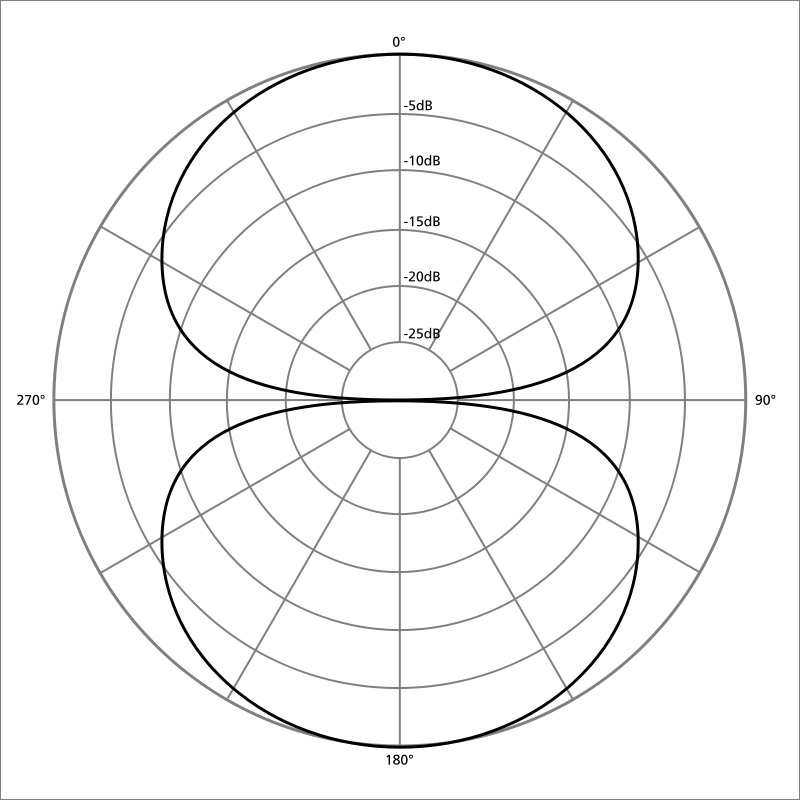
For singing, cardioid is almost always the right choice. It captures sound from directly in front and rejects sound from behind, which means it picks up your voice and rejects the playback from your speakers or headphones. If you're recording harmonies or group vocals around a single mic, omnidirectional captures from all directions equally. Bidirectional (figure-8) is useful for two singers facing each other across one mic.


Essential Accessories for USB Microphone Singing Setup
- Pop filter — Essential for recording plosives cleanly. Even mics with built-in pop shields benefit from an additional external filter for close-miked vocals. Learn what pop filters actually do and why they're non-negotiable.
- Shock mount — Isolates the mic capsule from desk vibrations, mouse clicks, and floor thumps. Critical if you're recording on a desk without acoustic isolation.
- Boom mic stand or desk arm — Positions the mic at the correct angle and distance from your mouth. A boom arm allows you to sing while standing, which opens up the diaphragm and improves vocal quality significantly.
- Closed-back headphones — Necessary for zero-latency monitoring while tracking vocals. Closed-back design prevents headphone bleed into the microphone capsule.
- Acoustic treatment — Even simple acoustic foam panels on your primary reflection points will dramatically improve your recordings. Our acoustic treatment guide covers where to start without breaking the budget.
Where to Buy: Regional Pricing Guide
Best Places to Buy in the US, UK, and Europe
For US buyers, Amazon and Sweetwater (sweetwater.com) offer the best selection and fast shipping. Sweetwater is particularly recommended for its free technical support, which can be invaluable when setting up your first vocal recording chain.
For UK and European buyers, Thomann (thomann.de) is the go-to source — Europe's largest music retailer, with competitive pricing, fast shipping across the EU, and excellent return policies. We've linked to Thomann's product pages throughout this guide for models available there.
Warranty Considerations by Region
Rode's remarkable 10-year warranty (available on the NT1 5th Gen and NT-USB+) covers both manufacturing defects and parts for a full decade — by far the longest warranty in this product category. Shure offers a 2-year warranty across their MV range. Audio-Technica covers their USB mics with a 1-year limited warranty. Always register your product on the manufacturer's website immediately after purchase to activate full warranty coverage, regardless of region.
Frequently Asked Questions
Can I use a USB mic for professional singing recordings?
Yes — particularly with modern USB mics like the Rode NT1 5th Generation (32-bit float, 192kHz) or the Audio-Technica AT2020USB-X (24-bit/96kHz). These mics match or exceed the technical specifications of many XLR condenser microphones at similar price points. The limiting factor is rarely the microphone itself — it's the acoustic environment you're recording in. A USB mic in a well-treated room will outperform an expensive XLR mic in an untreated space every time. For recording tips that apply to both setups, see our essential recording tips guide.
Do I need a pop filter for a USB microphone?
Yes, unless the mic comes with an effective integrated pop filter (as the Rode NT-USB+ and Elgato Wave:3 do). Plosives — the air burst created by "p" and "b" consonants — can overload any microphone's diaphragm regardless of quality. A $15–$30 pop filter placed 2–4 inches in front of the capsule eliminates the problem entirely. Learn more about how pop filters work.
How do I stop my USB mic from picking up background noise?
There are several effective approaches. First, use a cardioid polar pattern — it naturally rejects sound from behind the mic where most room noise originates. Second, apply a noise gate in your DAW: this automatically mutes the signal when it drops below a set threshold, cutting the mic between vocal phrases when background noise would otherwise be audible. Third — and most impactful — invest in basic acoustic treatment for your home studio. Even three to four absorber panels at primary reflection points reduce room noise significantly. Finally, record when ambient noise is minimal: turn off HVAC systems, close windows, and silence any nearby electronic hum sources.
What is 32-bit float and why does it matter for singers?
32-bit float is a recording format that provides such an enormous dynamic range that it's virtually impossible to clip or distort the signal, regardless of input level. For singers, this means you can record without setting gain carefully — you won't ruin a take by belting unexpectedly. You adjust the levels after recording, in post-production, with full audio quality preserved. Currently, the Rode NT1 5th Generation is the only USB microphone offering this capability.
What is the best USB microphone for singing and recording guitar at the same time?
The Samson G-Track Pro is the only USB microphone with a built-in ¼" instrument input, allowing you to record your voice and guitar simultaneously as two separate tracks. No other USB microphone on this list can do this without an additional audio interface. If you're a singer-songwriter who wants to capture both at once, it's the clear answer.
Start Capturing Your Best Vocal Performances Today
The USB microphone market has matured enormously. Whether you choose the unclippable 32-bit float capability of the Rode NT1 5th Generation, the dynamic resilience of the Shure MV7+, or the singer-songwriter functionality of the Samson G-Track Pro, you're getting professional-grade vocal capture at a fraction of what a full studio setup costs.
Your voice is the instrument. The right USB mic is the tool that does it justice. If you're building a complete home studio setup around your vocal recordings, our home recording studio equipment list for beginners walks you through everything else you'll need alongside your new microphone.
Last update on 2026-08-20 / Affiliate links / Images from Amazon Product Advertising API