
If you've ever plugged a guitar into a long cable and picked up a buzz that wasn't there five feet ago, you've already met the subject of this guide. Balanced vs. Unbalanced Audio is the single most important wiring distinction in a recording studio or on a live stage, because it determines whether your signal arrives clean or arrives with every bit of electrical noise it passed on the way. Below, we'll break down exactly how each type works, which cables and connectors belong to each camp, and — using the interactive tool further down the page — how to work out whether your own cable run is safe.
Quick answer
Unbalanced audio uses two conductors (a signal wire and a ground/shield) and is prone to picking up noise on long cable runs. Balanced audio uses three conductors — a positive (hot), a negative (cold), and a ground — and uses a technique called common-mode rejection to cancel out almost all induced noise, even over very long distances. Balanced and unbalanced signals sound identical; the only difference is noise resistance.
What Is Unbalanced Audio?
An unbalanced connection carries a signal through two conductors: a positive (hot) wire and a negative wire that doubles as the ground. That ground usually wraps around the hot conductor as a shield, which blocks a portion of the electromagnetic and radio-frequency interference (RFI) trying to get in.
The problem is length. A long conductor behaves like an antenna, and the longer it runs, the more noise it collects — while the shield's ability to block that noise stays fixed. That's why unbalanced cables are generally kept short: as a rule of thumb, stay under 15–20 feet for instrument-level cables, and you're much safer from hum and buzz. Unbalanced lines typically carry either low-level instrument signals or -10 dBV line-level signals, whereas most higher-quality professional gear uses balanced connections running at +4 dBu.
Common Types of Unbalanced Cables
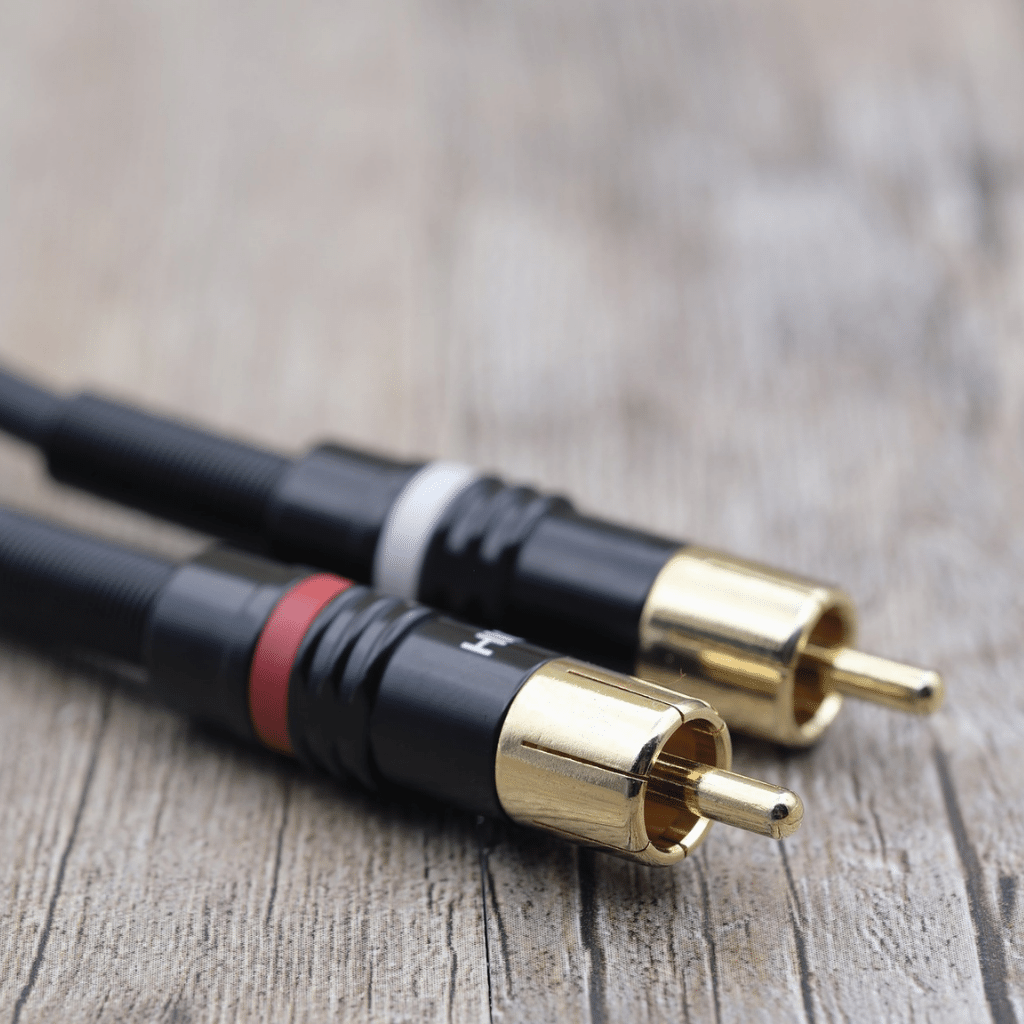
RCA cables are the red-and-white (or red/white/yellow) connectors found on HiFi systems, DJ gear, and consumer electronics. Because they're unbalanced, RCA runs are typically kept to around 25 feet or less to avoid picking up interference.
TS (tip-sleeve) quarter-inch cables are the standard "instrument cable" you'll recognize by the single insulator ring on the plug. The tip carries the positive signal and the sleeve carries the ground. They're used for electric guitars, basses, and mono keyboard outputs, and are best kept under about 15 feet. For a full rundown of when a TS cable is (and isn't) the right choice, see our guide on recording electric guitar at home.

What Is Balanced Audio?
A balanced connection uses three conductors instead of two: a hot (positive) wire, a cold (negative) wire, and a ground. Rather than relying on the ground alone for shielding, balanced audio actively cancels noise using both signal legs — which is why it's the standard for professional microphones, mixing consoles, and almost any connection that needs to travel a long distance without degrading.
The Science: How Balanced Cables Cancel Noise
The source sends two copies of the same audio signal down the cable — one on the hot leg, one on the cold leg — with the cold copy inverted 180 degrees out of polarity. This process is called common-mode rejection, and it works in four steps:
- The source sends identical audio down both the hot and cold wires, with the cold wire's copy flipped 180° out of phase.
- As the signal travels down the cable, both wires run side by side, so they pick up the exact same external noise.
- At the receiving end, a differential amplifier flips the cold signal back into phase.
- The two audio signals now reinforce each other and add together — but the noise, which was identical on both legs, is now out of phase with itself and cancels out almost completely.
▶ See common-mode rejection in action
Press play: watch the hot and cold waves carry identical noise, then cancel it out at the receiving end.
Common Types of Balanced Cables
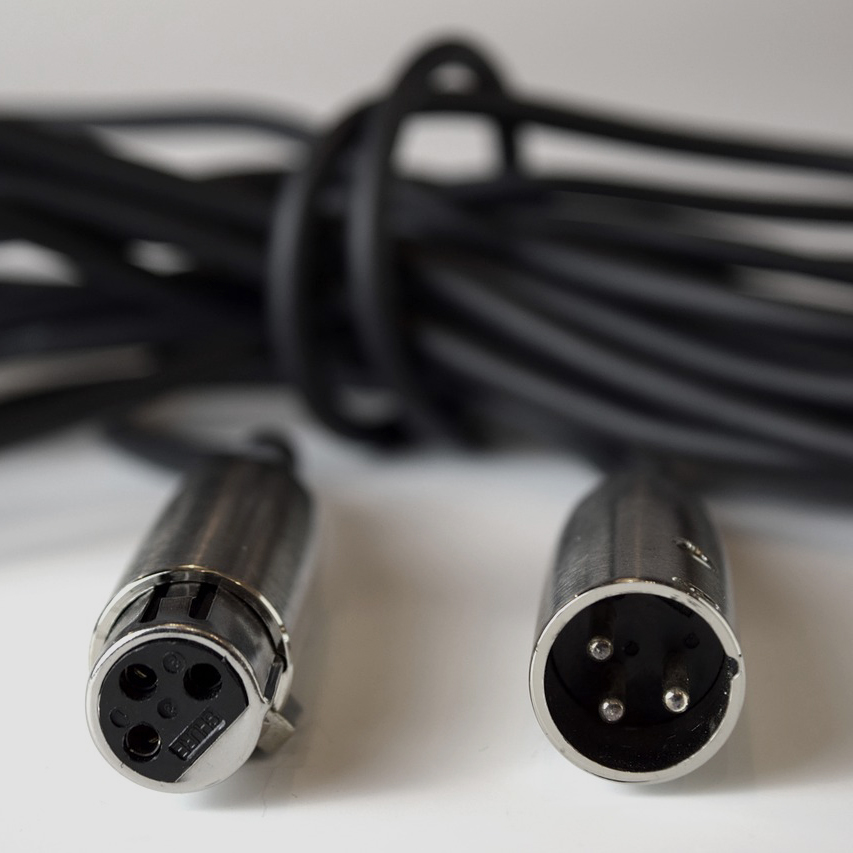
XLR cables use a three-pin connector, with a female end connecting to a device's output and a male end connecting to an input. Thanks to balanced wiring, XLR cables can reliably carry a signal up to around 200 feet. They're the standard connector for professional microphones — see our guide on connecting an XLR microphone to your computer if you're setting one up for the first time.
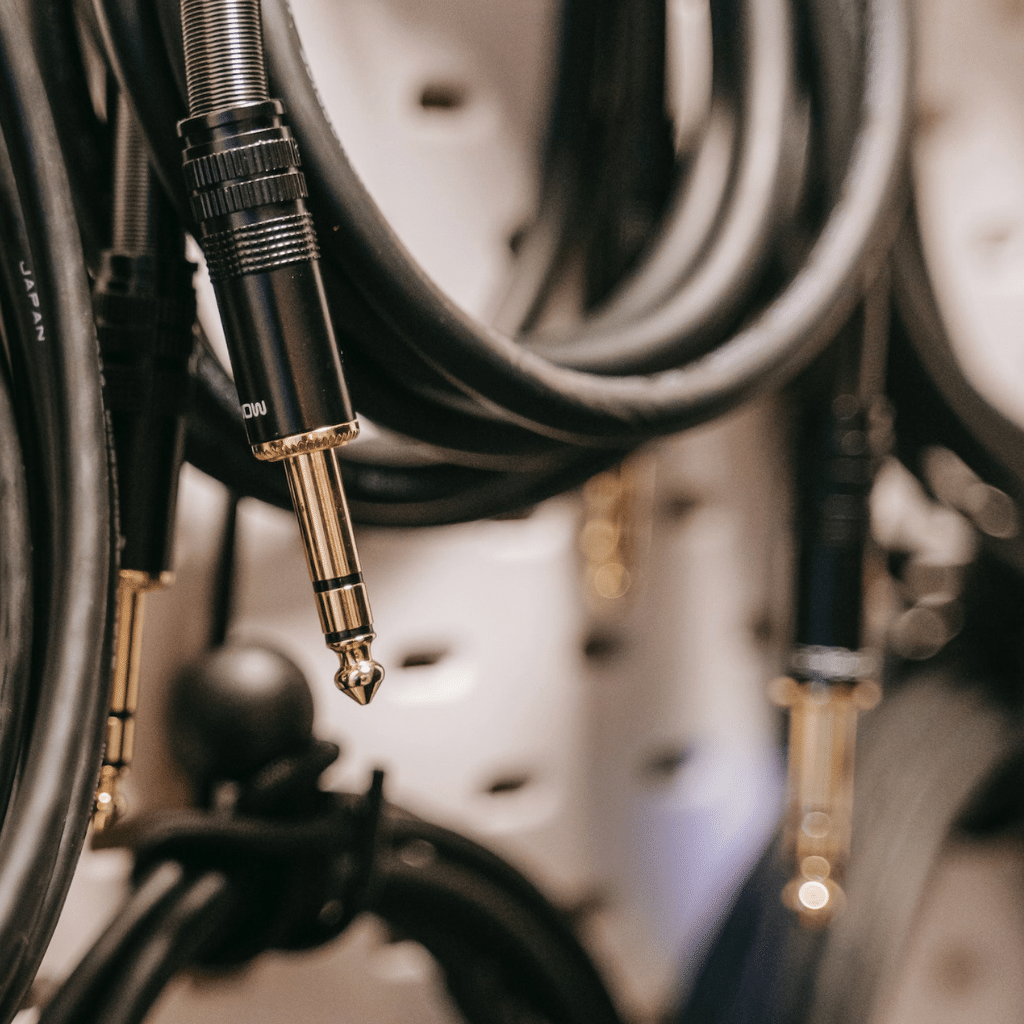
TRS (tip-ring-sleeve) quarter-inch cables are the balanced counterpart to TS cables, identifiable by their two insulator rings. They're less common than XLR but essential for balanced line-level connections — for example, running from an audio interface to studio monitors. Our studio monitor buying guide covers balanced vs. unbalanced monitor connections in more depth.
Try It: Cable Length Safety Checker
Use the tool below to check whether your planned cable run is likely to stay clean, based on the distance guidelines above.
🎚️ Cable Length Safety Checker
A 15 ft TS instrument cable should stay quiet in most rooms.
Headphone Cables: The TRS Stereo Confusion
Here's a common mix-up: standard headphones use a TRS connector, which is also the balanced-cable connector described above — but that doesn't make headphone audio "balanced." A stereo headphone TRS plug carries a left channel, a right channel, and a shared ground. That's an unbalanced stereo signal, not a balanced mono one (hot, cold, ground). True "balanced headphones" refer to a different differential-amplifier wiring scheme used by some audiophile gear, not a property of the physical drivers themselves. If you're shopping for a pair, our studio headphones guide covers what actually matters for mixing and tracking.
Bridging the Gap: Converting Unbalanced to Balanced
Say you need to run a bass guitar — an unbalanced, high-impedance instrument signal — 100 feet to a mixing console. Run it that far on a standard TS cable and you'll likely pick up significant noise. This is exactly what a DI (Direct Injection) box is for: it converts an unbalanced, high-impedance instrument signal into a balanced, low-impedance signal that can travel much farther cleanly, typically leaving via an XLR output. Most DI boxes also include a ground lift switch, which breaks the ground connection between two pieces of gear to eliminate ground-loop hum without affecting the audio signal itself.
It's worth being clear on one point: you cannot simply plug an unbalanced output into a balanced input with a passive adapter and expect balanced-style noise rejection — a DI box (or a dedicated balancing transformer) is doing active work, not just changing the connector shape.
Where Does the Noise Actually Come From?
There are two main culprits behind noise on unbalanced systems:
- Ground loops — when there's more than one path to ground for a signal, often because equipment isn't properly grounded or cables run between areas with different ground potentials (like different floors of a building).
- RFI (radio-frequency interference) — noise from power lines, dimmer switches, fluorescent lights, computers, or even nearby AM/FM broadcasts and cell towers.
Which Is Better: Balanced or Unbalanced Audio?
Neither format sounds "better" in terms of raw fidelity — balanced and unbalanced signals are sonically identical. What balanced wiring buys you is a lower noise floor over distance. If a short unbalanced cable is already dead quiet in your setup, switching to balanced won't change the sound; it simply gives you headroom for longer runs and noisier environments.
Use unbalanced when:
- Cable runs are short (under ~15–25 ft)
- Connecting a guitar or bass to an amp or interface
- Wiring a home HiFi or consumer setup
- You're in a low-interference environment
Use balanced when:
- Connecting any microphone
- Cable runs exceed 20–25 ft
- Wiring studio monitors or a mixing console
- Working near lighting rigs, dimmers, or heavy electrical gear
Quick Reference: Balanced vs. Unbalanced Audio
| Feature | Unbalanced Audio | Balanced Audio |
|---|---|---|
| Internal conductors | 2 (signal + ground) | 3 (hot, cold, ground) |
| Typical safe distance | Under 15–25 ft | 100–200+ ft |
| Noise rejection | Low | High (common-mode rejection) |
| Common connectors | TS, RCA | XLR, TRS |
| Typical signal level | Instrument level / -10 dBV | +4 dBu (pro line level) |
| Primary use cases | Guitars, consumer audio | Microphones, studio gear, live sound |
For a broader look at every connector type you'll run into in a home studio — not just balanced vs. unbalanced — see our full guide to audio cables and connectors, and if you're still assembling your setup, check our home studio equipment checklist and audio interface buying guide for how these cables connect to the rest of your gear.
Frequently Asked Questions
Does balanced audio sound different than unbalanced?
No. Balanced and unbalanced signals sound identical. The only difference is that balanced signals are far less susceptible to interference and noise over distance.
Are XLR cables balanced or unbalanced?
XLR cables are balanced. They carry the signal across three conductors — hot, cold, and ground — which is what enables common-mode noise rejection.
Is an XLR-to-RCA cable balanced?
No. A chain is only as strong as its weakest link — the moment the signal passes through an unbalanced RCA connector, the entire connection becomes unbalanced. You can't convert a balanced signal to unbalanced (or vice versa) just by changing the connector shape.
Can you plug an unbalanced cable into a balanced input?
Yes, but the connection becomes unbalanced as a result, and you'll lose the noise-rejection benefit for that run. If you need real noise rejection on an unbalanced source, use a DI box instead of a simple adapter.
Why don't electric guitars use balanced cables?
Passive guitar pickups are inherently unbalanced, high-impedance devices, so they're wired with simple TS instrument cables. If you need a long, clean run from a guitar or bass, a DI box will convert the signal to balanced for you.
Choosing between Balanced vs. Unbalanced Audio really comes down to distance and application: keep unbalanced TS and RCA cables short, reach for balanced XLR or TRS whenever you're running a microphone or crossing more than 20–25 feet, and use a DI box to bridge the two when a guitar or bass needs to travel farther than its cable was designed for.


